

Review: Routine

Silence, solitude and machines that watch.
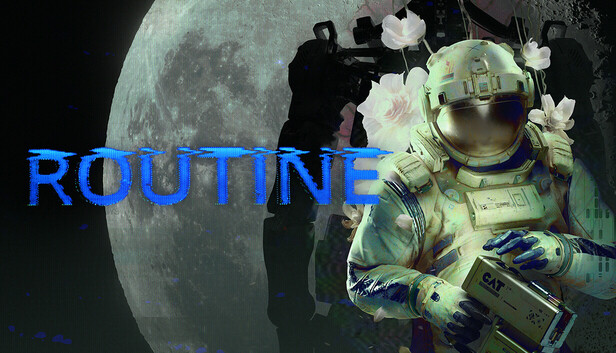
Routine leans into a more psychological type of horror, fueled by a constant sense of isolation. Right in the opening chapter, Birth, we wake up in a bed with no clear context, with only a nearby terminal displaying a vague message about an external software engineer and a scheduled meeting. This introduction already sets the tone of the game. The narrative is fragmented and relies on exploration, collecting physical documents and reading pamphlets scattered around the environment to understand what happened on the lunar base.
It is an independent project by Aaron Foster, who later formed the studio Lunar Software with Jemma Hughes and Pete Dissler. The game went through years of pauses and reconstruction until it received support from Raw Fury. Its retrofuturistic 80s aesthetic and part of Mick Gordon’s soundtrack define the quiet and claustrophobic horror tone behind the entire production.
GAMEPLAY
Movement can be a point of difficulty depending on the player. The combination of commands, such as space together with shift and S to crouch, tends to be less intuitive than modern standards. It requires repetition and may feel awkward during the first hours.

The game does not use a traditional HUD. Almost all information is transmitted through the C.A.T. device, which works as a flashlight, scanner, interface and improvised weapon. The absence of a central aiming reticle also affects precision and can cause discomfort in more delicate interactions since there is no clear visual indication of where the cursor is positioned.
Saving progress is also tied to the atmosphere. Instead of conventional menus, the player uses projectors found along the way. This system contributes to immersion, although it can limit the pace of exploration when the player is far from a safe point.

The presence of modules that modify C.A.T. parameters, such as brightness and refresh rate, adds a retro charm but also increases the care required to explore the hidden sectors of the lunar base. This all comes together to create slow, tense and always vulnerable exploration, culminating in an alternate ending that depends directly on how the player survives this journey.
VISUALS AND SOUND
This is where the game consistently impresses. The aesthetic is faithful to the science fiction style of the 80s and 90s, with environments that resemble classic productions from that era. Every scenario was built with attention to the atmosphere of abandonment, silence and decay. The lunar base conveys the feeling of a forgotten place, constantly reinforcing discomfort.

The visual palette, lighting and corridor design create an efficient claustrophobic environment. Seeing the setting for the first time quickly shows how much the game values a strong aesthetic identity.
The soundtrack and sound design are equally important. Many moments depend on distant noises, metallic echoes, pressure shifts and mechanical sounds. Silence, when it appears, has significant weight and sustains much of the psychological tension.
The soundtrack also deserves special attention thanks to Mick Gordon, a composer known for creating intense and impactful atmospheres. He previously worked on major soundtracks such as Doom (2016), Wolfenstein II The New Colossus (2018) and Doom again in its more recent releases. His signature sound helps reinforce the constant tension, isolation and sense of threat that the game aims to deliver.
ACHIEVEMENTS
Unfortunately, during the review period the game did not yet have achievements enabled. It was also not possible to view an official list to highlight or evaluate this aspect. When achievements are added, this portion of the experience may gain an important layer, especially for players who enjoy completing one hundred percent of the progress.

TRAILER OFFICIAL
FINAL THOUGHTS
Routine is a game that focuses on solitude as its main source of tension. It delivers a strong atmosphere, a consistent aesthetic and a proposal that leans more into psychological discomfort than action. The absence of a HUD enhances immersion, although it introduces small mechanical challenges, especially at the beginning when less intuitive commands can affect fluidity.
The fragmented narrative, detailed environments and faithful visual style inspired by the 80s and 90s make exploring the lunar base engaging. Even with minor technical obstacles and the reliance on environmental clues to understand the story, the experience remains intense and true to what the game aims to be.
Routine stands out as a silent, cold and tense journey driven by curiosity and the constant discomfort of being alone in a place that clearly did not want to be found again.


Comments