

Review: Hell Clock

A dive into hell where Brazilian culture meets one of the most addictive roguelikes of recent years.
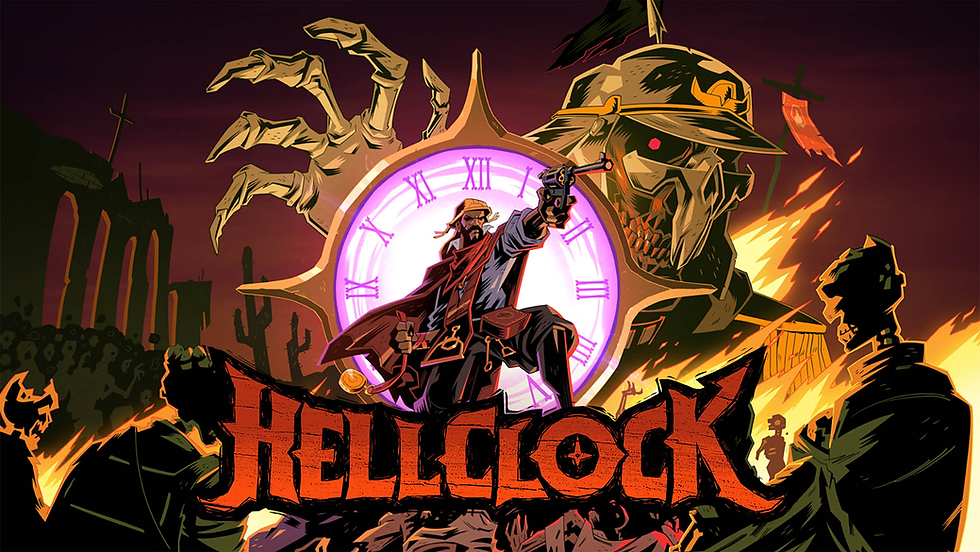
The Brazilian game industry continues to gain recognition with projects that embrace a strong sense of identity, and Hell Clock is one of those games whose personality shines from the very first minutes. Instead of simply taking inspiration from the biggest names in the genre, Rogue Snail builds an experience that borrows familiar ideas while giving them its own distinctive signature. It was a pleasant surprise to discover a game that blends elements of Diablo and Hades so naturally, automating several actions to make combat feel even smoother while using one of the most significant events in Brazilian history as the backdrop for its adventure.
More than just an excellent roguelike, Hell Clock demonstrates remarkable attention to its setting. Brazilian culture is present in the voice acting, expressions, dialogue, characters, and the way the entire narrative is constructed. These details bring players closer to the world being portrayed and give the adventure a personality that is difficult to find even in major international productions. It quickly became clear that this was exactly the kind of game I never realized I had been missing.
STORY
Hell Clock presents a fantastic reinterpretation of the War of Canudos, using the historical conflict as the foundation for a compelling supernatural narrative. Players take control of Pajeú, a warrior who ventures into the depths of Hell to rescue the soul of Antônio Conselheiro after the tragic events that marked the fall of Canudos.
Although the premise is rooted in history, the game never attempts to recreate those events with historical accuracy. Instead, it uses this context to craft an adventure filled with demons, infernal creatures, and corrupted locations, transforming one of Brazil's most important historical episodes into the perfect setting for an action RPG.
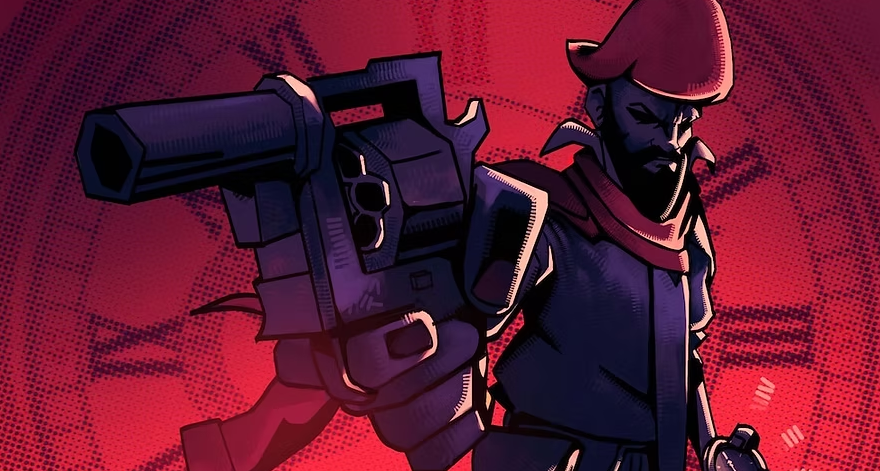
As players descend through the different layers of the dungeon, new events are revealed through beautifully crafted cutscenes. I particularly enjoyed how the campaign rewards progression. Every major milestone is usually accompanied by a cinematic that expands the story, develops its characters, and keeps curiosity high about what lies ahead.
This structure works exceptionally well because the narrative evolves alongside the character. As battles become more intense, the story also gains emotional weight, ensuring that every new floor feels meaningful rather than simply another room full of enemies.
GAMEPLAY
The structure of Hell Clock is incredibly easy to understand, yet offers tremendous depth for players who enjoy experimenting with different builds.
Each expedition takes players into an infernal region composed of multiple floors. As enemies are defeated, the descent continues deeper into the dungeon, presenting tougher challenges alongside increasingly valuable rewards. This gameplay loop quickly becomes highly addictive because nearly every room provides some form of character progression.

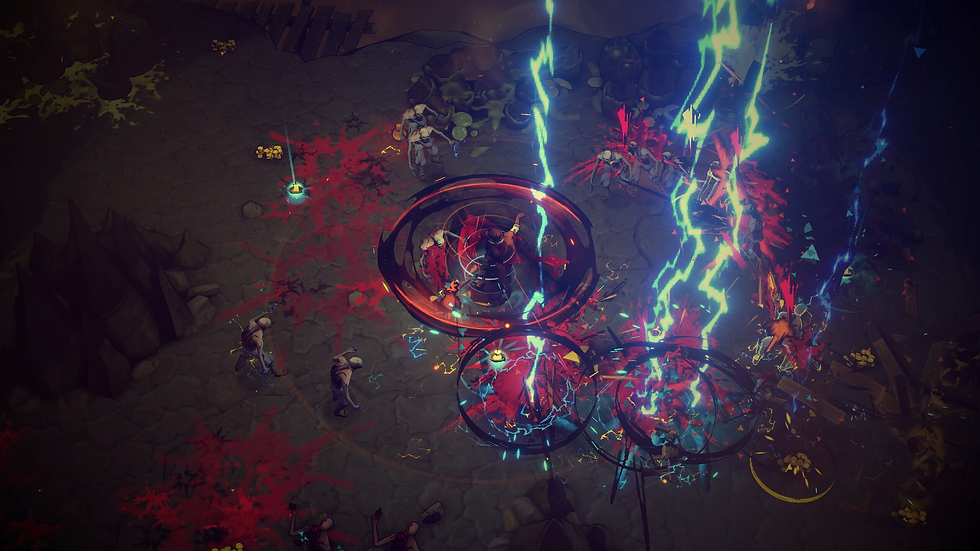
Combat is undoubtedly one of the game's greatest strengths. Skills are fast, impactful, and visually satisfying, while constantly evolving throughout each run. The progression system allows even the simplest ability to transform dramatically after only a few minutes, creating incredibly powerful combinations.
One of Rogue Snail's smartest design decisions was automating several actions that would normally require additional player management. This keeps the experience dynamic and allows players to focus on positioning, movement, and build creation instead of repetitive micromanagement. The philosophy feels very similar to Hades, while the level of customization is much closer to Diablo.
Equipment also plays a fundamental role in character progression. After rescuing certain NPCs trapped within the dungeon, new crafting and equipment options become available, greatly expanding the possibilities for customization.

It is not simply a matter of replacing one sword with another that has bigger numbers. Equipment modifies important attributes, increases health, strengthens specific abilities, and in many cases completely changes the way each encounter is approached. It is exactly the kind of system that constantly encourages players to experiment with new combinations.
Another essential mechanic comes in the form of relics scattered throughout each expedition. These powerful items can completely transform a run. On several occasions, I found myself rebuilding my entire setup simply because I had discovered a relic that perfectly complemented a specific ability.
This freedom ensures that virtually no two attempts ever feel the same. Even while using the same character, there is always room to explore different strategies.
The Hell Clock itself, the mysterious timepiece that gives the game its name, directly influences the pace of every expedition. A constant sense of urgency accompanies exploration, forcing players to balance risk and reward at all times. Fortunately, anyone who prefers enjoying the campaign at a slower pace can activate Relaxed Mode, removing the time limit and allowing each area to be explored without pressure.
If there is one aspect that might discourage some players, it is the sheer number of systems introduced during the opening hours. Equipment, blessings, abilities, relics, permanent progression, and several other mechanics appear in rapid succession. Thankfully, the learning process feels surprisingly natural, and after only a handful of runs everything begins to click naturally.
VISUALS AND SOUND
Visually, Hell Clock features a very beautiful art direction. The infernal regions have a lot of personality, the skill effects are eye catching without harming the readability of the action, and the number of enemies on screen helps create that constant sense of chaos that perfectly matches the game's style.
The bosses also deserve special praise. Each encounter introduces memorable creatures, with attacks that are easy to identify visually and patterns that require constant attention during combat.
But perhaps the aspect that impressed me the most is the entire cultural construction present throughout the production.
The dialogues use Brazilian expressions in an extremely natural way. The voice acting gives the characters a lot of personality, the dialects feel authentic, and the linguistic adaptation shows a rare level of care even when compared to major international productions. At no point did I feel like I was listening to a translated script that was simply made to fulfill a requirement.

The soundtrack fits this entire package very well, alternating moments of tension during battles with compositions that reinforce the dramatic atmosphere of the campaign.
This entire identity makes Hell Clock one of those games that could hardly have been created anywhere else. There is a clear pride in using Brazilian references to build its own universe, and this makes the entire experience even more special.
It would not be an exaggeration to place it alongside other great representatives of the national game industry.
ACHIEVEMENTS
The achievements in Hell Clock perfectly follow the game's philosophy and avoid falling into the trap of simply increasing the amount of time required to reach 100%. A large portion of them is unlocked naturally throughout the campaign, rewarding story progression, defeating important bosses, rescuing characters, and discovering new mechanics. Without revealing specific moments from the narrative, the list encourages players to explore practically all available content, making each new achievement represent a meaningful step in the journey rather than simply completing repetitive objectives.
After the main campaign ends, the achievements begin encouraging players to fully master the progression systems. There are challenges involving different difficulty levels, Hardcore, Ascension, Nightmare, Abyss, and Oblivion modes, as well as objectives connected to creating increasingly efficient builds and achieving impressive damage numbers. This makes the list appealing both to players who simply want to complete the adventure and to achievement hunters who enjoy overcoming truly difficult challenges. It is a set of achievements that rewards skill, understanding of the mechanics, and dedication to the endgame, without relying on artificial or excessively repetitive tasks.
TRAILER OFFICIAL
FINAL THOUIGHTS
Hell Clock was one of the biggest surprises I have found recently within the genre. Its combination of Diablo and Hades elements works in an extremely natural way, taking advantage of the best aspects of both worlds while removing some of the unnecessary complexity commonly found in more traditional ARPGs. The result is an extremely satisfying combat system, accompanied by a progression system that constantly encourages players to experiment with new builds.
The narrative based on the Canudos War adds a very strong identity to the campaign, while the excellent Portuguese localization, voice acting, and various cultural elements help transform the entire adventure into something truly unique.
Even requiring a short adaptation period due to the amount of available mechanics, the rewards come quickly. With every new descent into hell, players discover better equipment, more powerful relics, new abilities, and scenes that make the campaign even more engaging.
For anyone looking for an action roguelike with excellent replay value, addictive combat, and a strong Brazilian identity, Hell Clock easily deserves a place among their priorities. It is a production that showcases Rogue Snail's talent and reinforces that Brazil continues creating games capable of competing in quality with the biggest names in the international market.
SCORE: 8.2/10
Review by Gamertag: Scoulz


Comments