

Review: Warcraft III Reforged: Forsaken Kingdom

After All These Years, Warcraft III Has a New Story to Tell

In Warcraft III: Reforged: The Forsaken, we follow the final days of Lordaeron and the formation of a new society of the undead. The campaign combines strategy, exploration, and RPG elements, allowing heroes to equip items and develop their own abilities. The story covers Arthas's downfall and follows Garek, an undead who tries to understand what happened to him, while Sylvanas becomes increasingly important to the future of the Forsaken.
THE PROLOGUE

One interesting thing about Warcraft III: Reforged: The Forsaken is that you don't need to finish Reign of Chaos or The Frozen Throne to start playing. The expansion opens with the prologue, The Last Days of Lordaeron, before moving on to the Forsaken campaign.
At first, Lordaeron is still enjoying a period of peace. That changes when reports begin to emerge of a mysterious plague spreading across the land. At the same time, people are talking about Arthas and the prince's possible return. His ship has reportedly been spotted, but no one seems prepared for what is about to happen.
The cinematics bring back the visual identity of the original Warcraft III, now with a more polished finish. The in-game scenes also help tell the story without constantly relying on elaborate cinematic sequences. For anyone familiar with the franchise, seeing Arthas transformed, dressed in black, and so far removed from the hero he once was is one of the most striking moments of the opening.

His betrayal of his own father makes it clear just how much he has changed. By the time the Herald of Light appears, the destruction caused by Arthas has already gone too far. From there, we must regroup our forces and press on, traveling through areas such as Andorhal and fighting enemies while searching for resources to survive.
The prologue also changes the way we manage our heroes. Each character has their own inventory, equipment, and talents. We can't simply pick up everything we find along the way. We need to examine the items and decide which ones are actually worth using. For example, I found a ring that speeds up mana regeneration, which can make a difference during combat.
Healing and Clarity Potions remain important as well. At certain points, managing these resources and choosing which abilities to use can make the difference between pushing forward and losing most of the group.
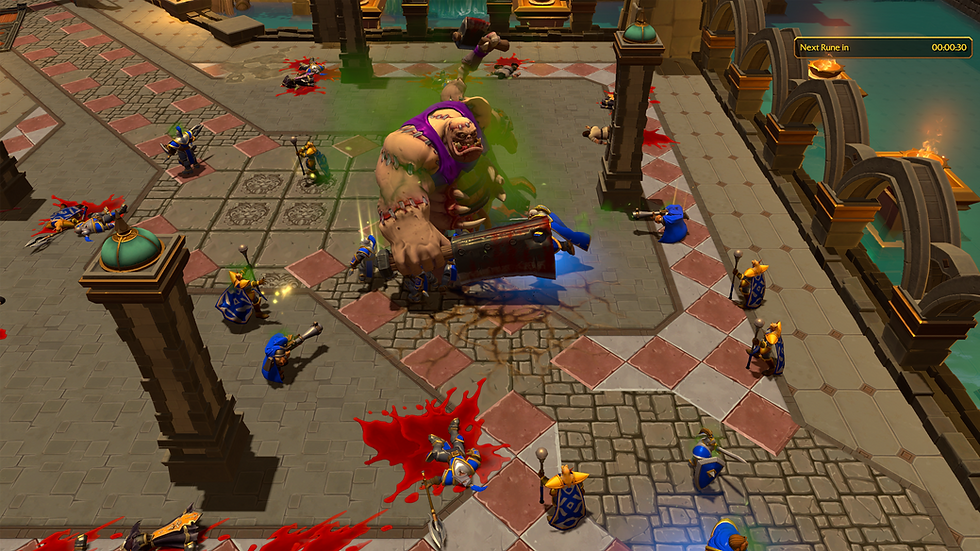
Not everything works as well. The first boss gave me a lot of trouble and ended up wiping out almost every unit I had left. The problem is that some attacks are difficult to interrupt, even when we try to stun the enemy. The fight becomes frustrating, especially when it feels like we have few ways to avoid taking damage.

I also would have liked more freedom to adjust the difficulty during the campaign. If a chapter becomes too difficult, we can't simply change the setting and pick up where we left off. We have to restart the chapter, which becomes even more frustrating when the save system doesn't work as well as it should.
Outside of combat, some sections require a little more attention. Certain areas hide objects and equipment, while other paths lead to levers that must be activated in the correct order. There are also traps, alternate routes, and tasks that must be completed within a time limit.
I liked this variety, but the length of the prologue doesn't always work in its favor. In some sections, it's easy to enter an area too early or waste time looking for an item that turns out to be less useful than expected. There are also moments when we can move forward without noticing something important, and we can't always go back afterward. Exploration can be rewarding, but we need to pay attention to where we're going to avoid wasting time.
FORSAKEN KINGDOM

The main campaign begins with Garek already transformed into an undead. He is found by Anya and must deal with a situation he doesn't fully understand. His memories and his attempts to figure out who he was before his transformation drive much of the journey, while Sylvanas's presence makes it clear that larger conflicts are unfolding around him.
This change in perspective helps set the campaign apart from the prologue. Instead of following only the fall of a human kingdom, we meet characters trying to find their place after losing their lives and everything they once knew. Garek doesn't have all the answers right away, and gradually uncovering them gives us a reason to keep following his story.
The RPG elements are still here. Each hero has their own equipment and talents, so we need to think about how to develop each character. However, there's an important detail when it comes to experience: the character who kills an enemy receives the experience for that kill, rather than having it automatically shared with the entire group. This requires a little more care when we want to strengthen a specific hero.

Exploration also plays a considerable role. We can travel through different areas, complete quests, and search for items needed to accomplish certain objectives. Some tasks require us to collect materials dropped by specific monsters, encouraging us to investigate the surroundings rather than always following a straight path.
I liked this variety because it gives us more to do than simply defeat every enemy in sight. At the same time, we need some patience to find what each task requires, especially when the item we're looking for depends on a particular enemy.
Another feature is the elevator system, which allows us to travel between the ruined capital and other locations. It helps connect the areas we explore and provides access to different parts of the campaign. As we progress, we can also improve our resources and prepare our heroes for the challenges ahead.
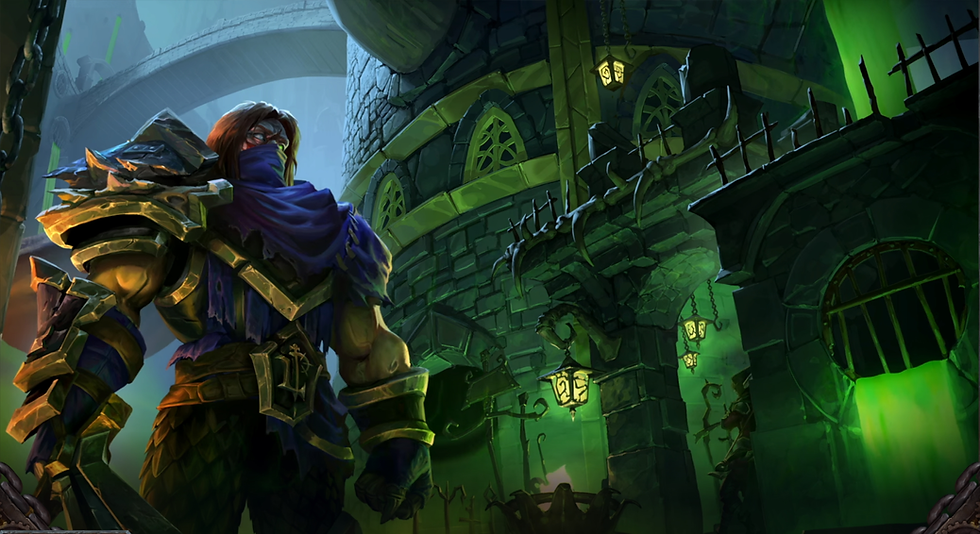
Garek's story carries more weight as his memories begin to return and his connection to the Light takes on a new meaning. The confrontation with the Scourge leads to a decision that costs him his life. His sacrifice doesn't just bring his own journey to an end. It also affects how Sylvanas views the future of the Forsaken.
Despite its strong moments, the technical side still has some limitations. In certain sections, maps take a long time to load, interrupting the pace of exploration. It doesn't ruin the entire campaign, but it's a noticeable problem in an experience that relies so heavily on moving between different areas.
NEW FEATURES
Update 3.0 also introduced changes for players who already own Warcraft III: Reforged. One of the biggest additions is the Definitive Edition graphics mode, which updates more than 600 units and improves aspects such as lighting, shadows, and visual effects. The goal is to modernize the presentation without completely abandoning the original game's identity.
The multiplayer mode also received new content. The Forsaken Paladin was added as a new hero, with healing abilities, area attacks, and magic resistance. Another change increases the number of units we can select at once from 12 to 24, making it easier to control larger armies.

For Brazilian players, the addition of a server in São Paulo provides another connection option. The World Editor has also received new tools for working with lighting and customizing objects. These changes are especially useful for players who enjoy creating their own maps and game modes, as they offer more customization options.
It's worth noting that some of these improvements are available to players who already own Warcraft III: Reforged, without having to purchase the expansion. This means the new features aren't limited to those who intend to play the Forsaken campaign.

TRAILER OFFICIAL
FINAL THOUGHTS
What bothered me most during the campaign was the combination of difficult encounters, limitations in the save system, and the inability to adjust the difficulty freely. The first boss in the prologue is a good example: losing almost every unit in a fight where the enemy's attacks are difficult to interrupt can make you lose some of your motivation to continue. Loading times could also be better.
On the other hand, I liked the way the expansion mixes strategy with RPG elements. Equipping heroes, choosing talents, searching for hidden objects, and deciding how to distribute experience adds more decisions beyond simply building an army and heading into battle. The puzzles and exploration quests also help break up the pace, even if some tasks take longer than they should.
As a fan of strategy campaigns with character progression, I see The Forsaken as an interesting addition to the Warcraft III universe. Garek's story, Anya's presence, and Sylvanas's role offer a different perspective on the events of Azeroth. There are still pacing issues and design choices that could work better, but the combination of strategy, exploration, and hero progression kept me interested until the end.
SCORE: 8.0/10
Review by Gamertag: SCOULZ


Comments