

Review: The Alters: Last Variable

More scientific, more contemplative, and just as engaging as the original campaign.
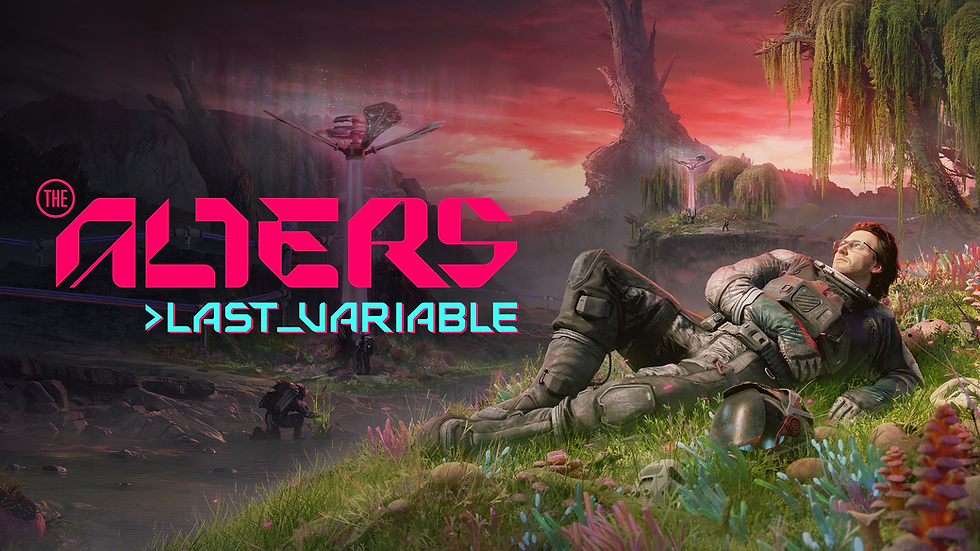
One of The Alters' greatest strengths was leaving important questions unanswered even after the credits rolled. Last Variable builds directly on that idea by turning one of the possible endings from the main campaign into a brand-new story, following the scientist Jan, who chose to remain on the planet while the others managed to escape. The expansion can be started independently from the base game and even includes a recap of previous events to help newcomers understand the context, although being familiar with The Alters' mechanics and universe makes the experience considerably more rewarding.
Rather than repeating the structure of the original campaign, the DLC completely shifts its perspective. Survival remains important, but it now shares the spotlight with a much deeper investigation into the planet's mysteries, the consequences of past decisions, and the fate of a Jan who spent years living with what the others left behind. The result is an expansion that meaningfully expands the universe created by 11 bit studios without feeling like simple bonus content, establishing its own identity through stronger character development, new mechanics, and, above all, its narrative.
STORY
The campaign follows the scientist Jan, the only version who chose to remain on the planet while the other Alters escaped. Anyone who played the base game will remember that he already played a major role as one of the most important Alters throughout the story.
Within the opening minutes, however, it becomes clear that a great deal of time has passed since those events. The environment has changed, Jan has grown older, and the mission is no longer about surviving for just a few more days. Now the objective is to understand the planet, uncover the true nature of the Oasis, and continue research that has spanned years of isolation.

Another element that greatly strengthens the story is the introduction of JanBot, an artificial intelligence created by Jan himself before the events of the expansion. Far more than just another computer inside the base, it serves as a living archive of years of scientific research. Throughout the campaign, it answers key questions, presents theories about the planet's strange phenomena, and even helps reconstruct parts of the story that remained unresolved in the main campaign. I particularly appreciated this approach because it avoids turning the DLC into a straightforward sequel that simply hands players all the answers. Many discoveries still require careful interpretation, making the investigation feel much more satisfying.
The existence of the new Alters also carries a very different meaning this time around. Instead of creating versions of Jan who pursued completely different professions, every Alter now originates from the scientist himself, resulting in a team made up entirely of research specialists. At first glance, this might suggest that they would all feel similar, but the exact opposite happens. Every Alter has a distinct personality, unique priorities, and a very different perspective on the mission.
The Physicist, for example, displays an almost excessive confidence in his own ideas and frequently believes he's several steps ahead of everyone else. Meanwhile, the Geologist approaches new discoveries with contagious enthusiasm, while other versions are noticeably more cautious or pragmatic. These differences make conversations one of the franchise's strongest features once again. More than once, I found myself delaying an expedition simply to watch new interactions unfold or see how a particular Alter would react to decisions I had made.
Jan himself is no longer simply someone struggling to survive. He now carries the weight of years of research, failures, and difficult decisions. Since he has become the very variable responsible for creating new versions of himself, the narrative introduces an interesting layer about identity and continuity without relying on lengthy exposition to make the concept work.
There are several meaningful revelations throughout the campaign, but 11 bit studios wisely allows players to assemble the larger puzzle gradually through documents, experiments, conversations, and environmental observations. As a result, Last Variable feels like a natural continuation of the original story rather than an epilogue created solely to tie up loose ends.
GAMEPLAY
Anyone familiar with The Alters will feel at home almost immediately. Base management, exploration, resource gathering, and research remain the heart of the experience, but Last Variable introduces several subtle changes that noticeably alter the campaign's pacing without losing what made the original game so compelling.
The biggest difference lies in how time is handled. Whereas the original campaign revolved around a steadily advancing countdown toward catastrophic events threatening the team's survival, this expansion replaces that with a countdown until the Sun returns. Once that moment arrives, the planet's surface becomes completely uninhabitable again, creating constant pressure to carefully plan every expedition, research project, and construction task. The sense of urgency remains, but it is now tied much more closely to scientific progress than to simply escaping.
Another mechanic that significantly changes the campaign's structure is cryogenic sleep. At certain points, Jan must spend extended periods in stasis to preserve his lifespan while his Alters continue working at the base. This passage of time creates some fascinating situations, as the scientists continue evolving, developing new relationships, and even changing their behavior while the protagonist remains asleep. It is a mechanic that blends seamlessly with the narrative and reinforces the feeling that you are overseeing research conducted over the course of many years.

The base itself also represents an important change. Unlike the massive mobile facility from the original game, you now operate from a fixed underground installation. This completely changes how space management works. Several times I had to reorganize rooms to accommodate new laboratories, storage facilities, and research equipment, demanding more planning as the campaign progresses. It isn't a complete reinvention of the formula, but it introduces fresh management challenges.
Exploration remains very similar to what players experienced in the base game, which can be viewed in two different ways. Those who enjoyed the familiar loop of leaving the base, gathering resources, avoiding anomalies, and returning before conditions worsened will likely appreciate that sense of continuity. On the other hand, players hoping for more substantial changes may notice that much of this structure remains largely untouched.
Even so, the expansion introduces enough fresh mechanics to justify returning to the planet. Terraforming is one of them. As new research projects are completed, previously inaccessible areas gradually become restored, creating a tangible sense of progress throughout exploration. It is a system that perfectly complements the campaign's scientific focus while reinforcing the idea that you're no longer merely surviving on this planet, but actively trying to understand and reshape it.

Research also takes on a much larger role than before. Much of the campaign's progression revolves around producing advanced materials, conducting experiments, and developing entirely new technologies. As a result, resource management remains absolutely critical, especially since every decision can significantly accelerate or delay your scientific progress.
Another aspect that continues to work exceptionally well is the dialogue between the Alters. Since they all come from scientific backgrounds, I initially expected their personalities to feel somewhat similar, but the reality is quite the opposite.
Each scientist has their own opinions about the mission, interprets events differently, and frequently clashes with the others. These differences make the base feel much more alive and ensure that management sections never feel like a repetitive checklist of routine tasks.
Some gameplay decisions did frustrate me, albeit in an almost amusing way. I don't know whether it was simply my impression, but there were several moments where the map seemed to overuse environmental barriers to restrict exploration. We're not talking about just a few blocked paths, but dozens of massive rock formations constantly forcing players to find alternative routes until they eventually gain the tools needed to destroy them. Since I chose to play on one of the higher difficulty settings, every detour meant spending additional time and resources, greatly increasing the tension during expeditions. Perhaps because of everything that happened in the base game, I also spent much of the campaign expecting one of the Alters to make another completely absurd decision. I have to admit there were moments when I thought, "Here we go again... someone's about to cut off their own arm." Thankfully, nothing quite that extreme happens, but simply expecting the unexpected speaks volumes about how well The Alters established its characters.
If there's one area that could have evolved further, it's the pacing of exploration itself. At several points, the campaign still relies on the familiar back-and-forth between the base and resource gathering locations, a gameplay loop that already divided opinions in the original release. Fortunately, the strength of the narrative and the new mechanics largely compensate for this repetition, keeping the campaign engaging almost from beginning to end.
VISUALS AND SOUND
Visually, Last Variable maintains exactly the same high standard established by the original game. The art direction remains one of the franchise's greatest strengths, using hostile environments to create landscapes that are simultaneously beautiful and unsettling. Although much of the visual identity will feel familiar to returning players, the expansion introduces new regions and makes excellent use of the contrast between devastated wastelands and areas where scientific research has begun transforming the environment.
The Oasis deserves special recognition. Besides representing one of the narrative's biggest mysteries, it also delivers some of the most breathtaking scenery in the entire experience. Its lush vegetation stands in stark contrast to the rest of the planet, immediately conveying the sense that something extraordinary exists there. It is an environment that sparks curiosity from the very first moment and consistently reinforces the desire to uncover its secrets.

Another aspect that caught my attention was the increased verticality of certain maps. At several points, exploration expands beyond wide open spaces by making much better use of multiple elevation levels, creating more interesting environments to navigate. It's not a dramatic change, but it helps reduce the familiarity for players who already spent dozens of hours exploring the planet during the original campaign. That said, this is also one area where I felt the game falls short. The map doesn't adapt particularly well to these vertical spaces, and the elevation system could certainly have been handled more effectively.
Character models remain outstanding, especially during dialogue sequences. Even though every version shares the same face, each Jan conveys a distinct personality through facial expressions, body language, and voice acting. It quickly becomes easy to identify who's speaking based solely on their behavior, which is essential for a story centered around multiple versions of the same character.
The audio design maintains the same impressive quality. The soundtrack complements exploration, research, and base management beautifully, alternating between subtle ambient pieces during routine scientific work and more intense compositions whenever urgent decisions become necessary. Sound effects continue to reinforce the feeling of isolation, while the voice acting remains one of the narrative's strongest pillars, giving every Alter a distinct identity and making their conversations even more believable.
ACHIEVEMENTS
Just like in the main game, the achievements naturally accompany campaign progression while encouraging players to fully engage with every new system introduced by the expansion. Many of them revolve around advanced scientific research, producing materials such as Phased Rapidium, Proxylium, and Megafluid, as well as making use of the terraformers scattered throughout the map. As a result, nearly every major addition introduced by the DLC offers meaningful rewards for players willing to experiment with its mechanics.

I also appreciated how several achievements encourage deeper interaction with the Alters while expanding the story itself. Completing every scientist's storyline is among the expansion's most rewarding challenges, as it encourages players to better understand each version of Jan. Meanwhile, more unusual achievements, such as creating the same Alter for a second time, promote gameplay choices that many players might otherwise never consider during a standard playthrough. In total, Last Variable adds only seven achievements, but each one feels purposeful and well integrated into the expansion's design instead of existing merely to inflate the achievement list.
TRAILER OFFICIAL
FINAL THOUGHTS
The Alters: Last Variable does exactly what I hoped an expansion to this universe would accomplish. Rather than simply adding new missions, it chooses to expand one of the most intriguing narrative paths left behind by the main campaign while answering many of the questions players were left asking after finishing the original game. Its stronger focus on scientific research, the continued evolution of scientist Jan, and the introduction of the new Alters allow the story to develop its own identity without losing the qualities that made The Alters so memorable.
Although it retains much of the original structure, including an exploration loop that can still feel somewhat repetitive at times, the new mechanics, outstanding character writing, and excellent narrative make this return to the planet well worth the journey.
SCORE: 8.6/10
Review by Gamertag: Scoulz


Comments